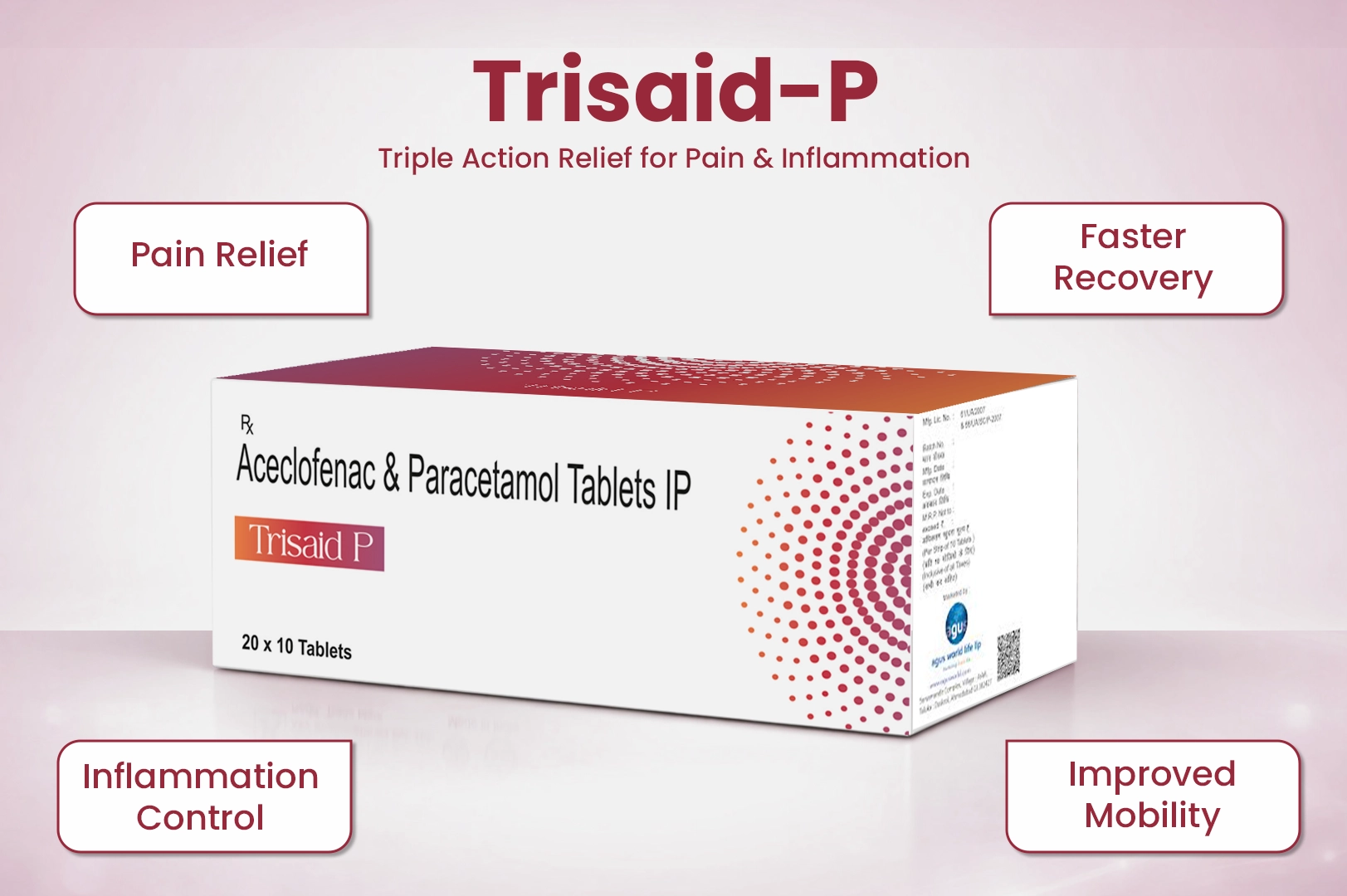
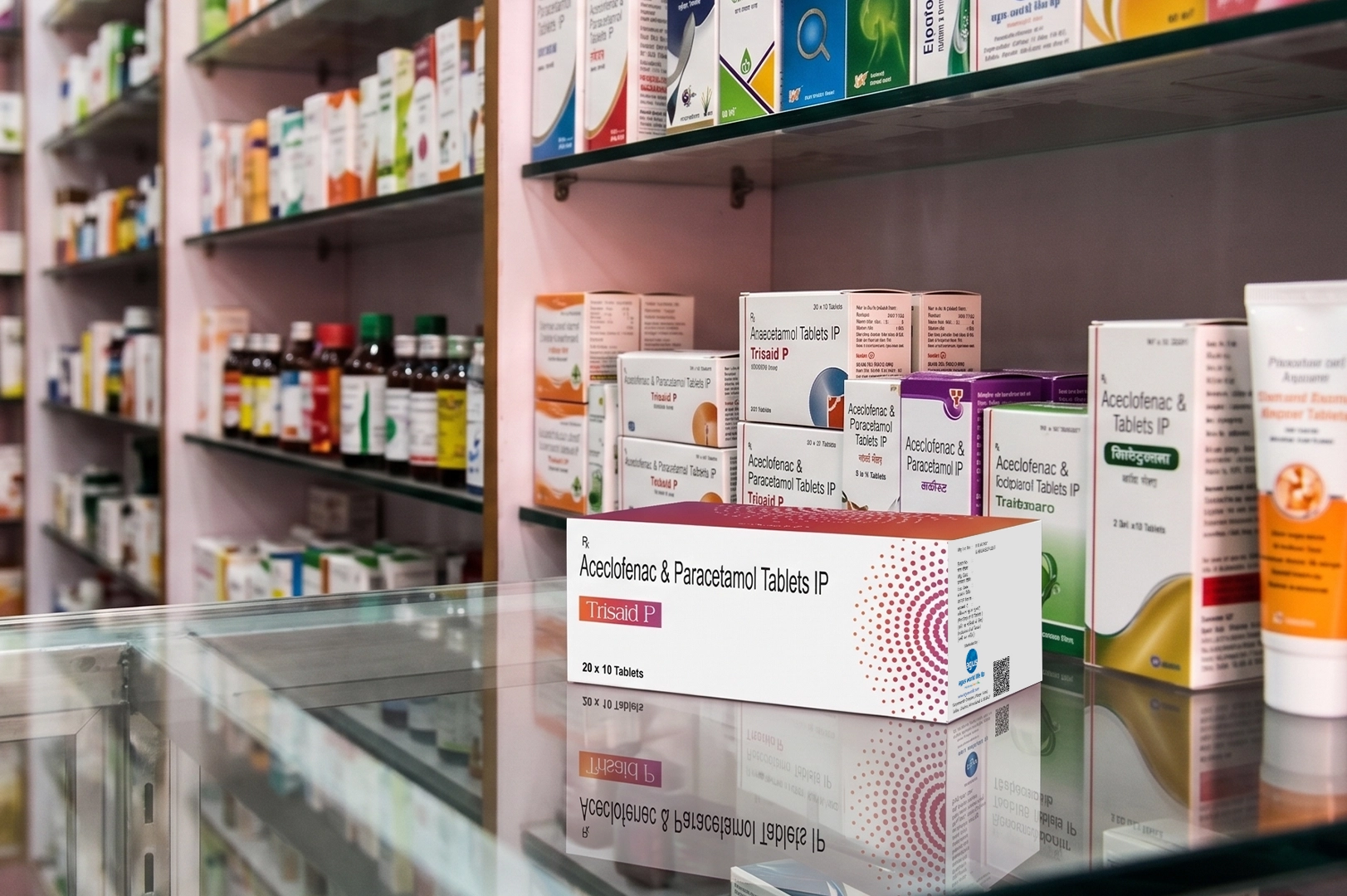
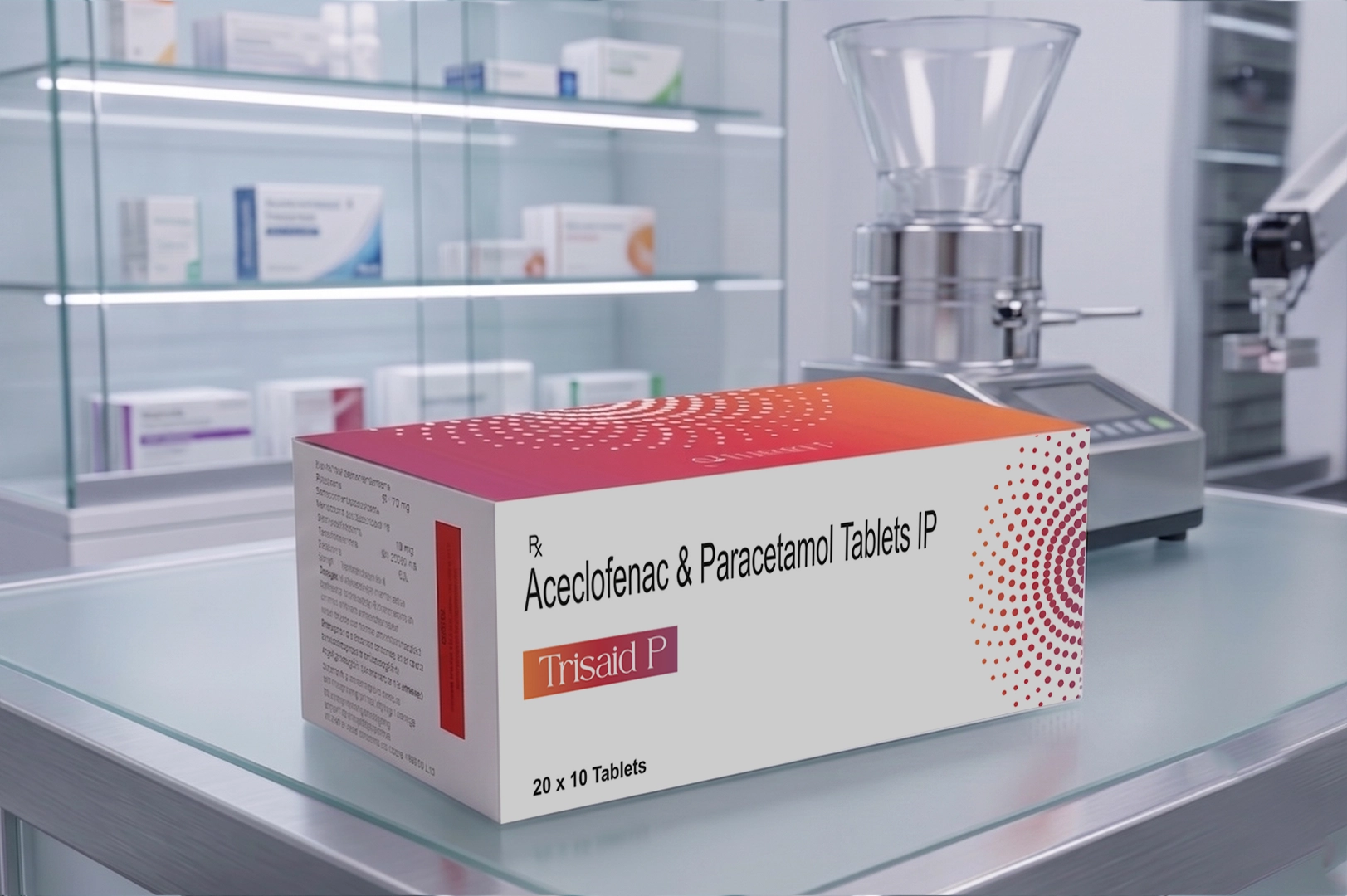
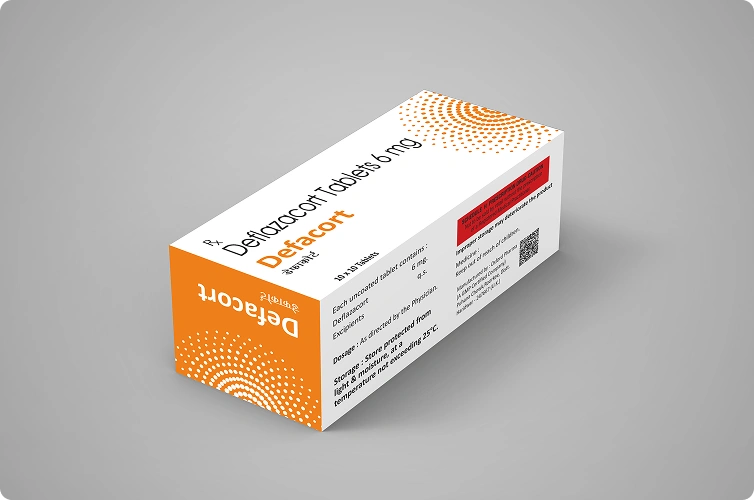
TRISAID-P

Relief that Moves with You — Fast, Effective & Well-Tolerated.

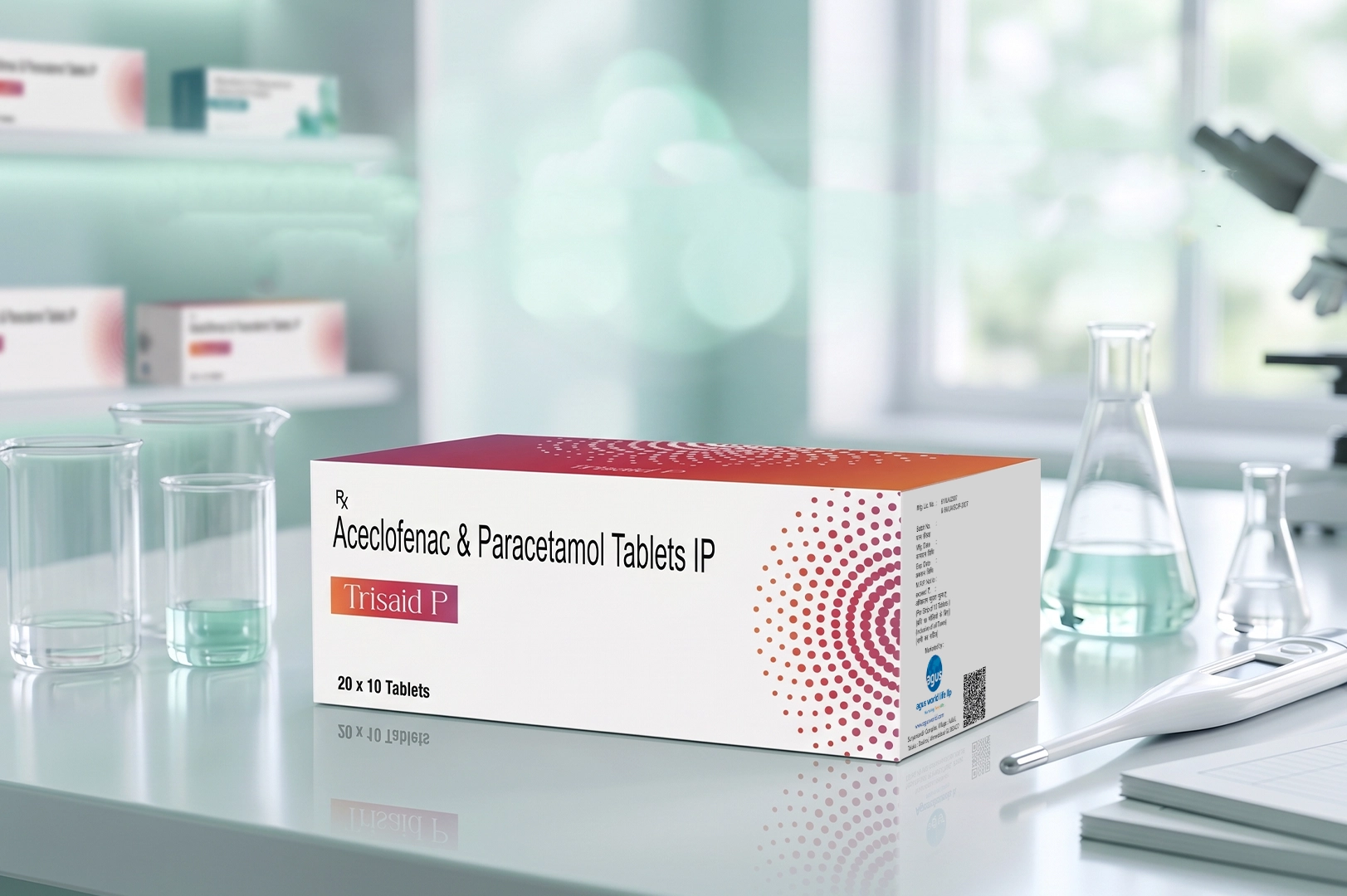
20x10 Tablets
Pharma
Pain Relief

Product highlights

  • Dual-mechanism action: Anti-inflammatory (Aceclofenac) + Central & peripheral analgesia (Paracetamol)
  • Faster onset of pain relief compared to individual components alone
  • Superior analgesic efficacy with lower individual drug doses — better GI tolerability
  • Broad-spectrum pain coverage: musculoskeletal, dental, post-operative, and fever
  • Aceclofenac preferentially inhibits COX-2 — reduced gastric side effects vs traditional NSAIDs
  • Paracetamol provides safe central analgesic and antipyretic effect
  • Well-tolerated combination with proven clinical safety profile
  • Convenient fixed-dose combination for improved patient compliance
TRISAID-P is a fixed-dose combination tablet containing Aceclofenac 100 mg and Paracetamol 325 mg. It combines the potent anti-inflammatory and analgesic activity of Aceclofenac (a selective COX-2 inhibitor NSAID) with the safe central and peripheral analgesic and antipyretic properties of Paracetamol. This synergistic combination provides rapid, effective, and well-tolerated relief from pain and fever across a wide range of clinical conditions, making it a trusted choice in pain management.

Dosage Form
Film-coated Tablets (Oral)
Product Name
TRISAID-P
Composition
Each film-coated tablet contains: Aceclofenac 100 mg + Paracetamol (Acetaminophen) 325 mg
Therapeutic Segment
Analgesics / NSAIDs & Non-opioid Analgesics / Pain Management
Pharmacological Action
Aceclofenac: Preferential COX-2 inhibitor — reduces synthesis of prostaglandins, thereby decreasing inflammation, pain, and fever. Paracetamol: Centrally acting analgesic and antipyretic — inhibits prostaglandin synthesis in the CNS and blocks pain impulse generation peripherally.
Mechanism
Aceclofenac inhibits cyclooxygenase (COX-1 and preferentially COX-2) enzymes, reducing the conversion of arachidonic acid to prostaglandins and thromboxanes, leading to anti-inflammatory and analgesic effects. Paracetamol acts centrally by inhibiting prostaglandin synthesis in the hypothalamus and modulating the endocannabinoid system, producing analgesia and antipyresis without significant anti-inflammatory action at peripheral sites.
Key Clinical Benefits
  • Synergistic dual-action: anti-inflammatory + analgesic + antipyretic coverage
  • Faster and more complete pain relief than monotherapy
  • Preferential COX-2 inhibition by Aceclofenac — reduced GI adverse effects
  • Paracetamol ensures safe antipyresis and adds central analgesic effect
  • Lower individual drug doses reduce dose-dependent side effects
  • Suitable for a broad range of acute and chronic pain conditions
  • Improved patient compliance with once fixed-dose combination tablet
  • Well-established safety profile in clinical practice
Key Indications
  • Rheumatoid Arthritis
  • Osteoarthritis
  • Ankylosing Spondylitis
  • Low back pain & Lumbago
  • Dental pain & Post-extraction pain
  • Post-operative pain
  • Dysmenorrhoea (Painful menstruation)
  • Musculoskeletal pain & Sports injuries
  • Fever with pain
Administration
Oral — taken with food or milk to minimize gastric irritation. Swallow whole with adequate water. Avoid lying down for 30 minutes after taking.
Recommended Usage
Adults: 1 tablet (Aceclofenac 100 mg + Paracetamol 325 mg) twice daily (morning and evening) or as directed by the physician. Not recommended in children under 12 years. Duration of use should be as short as possible at the lowest effective dose. Dose adjustment required in elderly patients and those with hepatic/renal impairment.
Dosage Form
Film-coated Tablets (Oral)
TRISAID-P
Each film-coated tablet contains: Aceclofenac 100 mg + Paracetamol (Acetaminophen) 325 mg
Analgesics / NSAIDs & Non-opioid Analgesics / Pain Management
Aceclofenac inhibits cyclooxygenase (COX-1 and preferentially COX-2) enzymes, reducing the conversion of arachidonic acid to prostaglandins and thromboxanes, leading to anti-inflammatory and analgesic effects. Paracetamol acts centrally by inhibiting prostaglandin synthesis in the hypothalamus and modulating the endocannabinoid system, producing analgesia and antipyresis without significant anti-inflammatory action at peripheral sites.
  • Synergistic dual-action: anti-inflammatory + analgesic + antipyretic coverage
  • Faster and more complete pain relief than monotherapy
  • Preferential COX-2 inhibition by Aceclofenac — reduced GI adverse effects
  • Paracetamol ensures safe antipyresis and adds central analgesic effect
  • Lower individual drug doses reduce dose-dependent side effects
  • Suitable for a broad range of acute and chronic pain conditions
  • Improved patient compliance with once fixed-dose combination tablet
  • Well-established safety profile in clinical practice
  • Rheumatoid Arthritis
  • Osteoarthritis
  • Ankylosing Spondylitis
  • Low back pain & Lumbago
  • Dental pain & Post-extraction pain
  • Post-operative pain
  • Dysmenorrhoea (Painful menstruation)
  • Musculoskeletal pain & Sports injuries
  • Fever with pain
Oral — taken with food or milk to minimize gastric irritation. Swallow whole with adequate water. Avoid lying down for 30 minutes after taking.
Adults: 1 tablet (Aceclofenac 100 mg + Paracetamol 325 mg) twice daily (morning and evening) or as directed by the physician. Not recommended in children under 12 years. Duration of use should be as short as possible at the lowest effective dose. Dose adjustment required in elderly patients and those with hepatic/renal impairment.

Explore Similar Products

Therapeutic Segments
0 +
Years of Operations
0 +
Key Brands
0 +
Quality Assurance
0 %

Request a Free Quote

Quick, customized pharma–nutra quotations.